Dossier in-Licensing Services
Promote Market Expansion and Secure Your Pharmaceutical Future with Personalized Dossier In-licensing Expertise
We offer seamless solutions for dossier in-licensing services
In-licensing services are important for acquiring pharmaceutical products or assets from external sources through licensing agreements, with the dossier being a crucial regulatory documentation package in these transactions.
At Zenovel, we recognize the challenges faced during dossier in-licensing, ranging from regulatory complexity to strategic decision-making across global markets. Our structured approach to dossier evaluation and in-licensing aligns with internationally accepted regulatory frameworks and good documentation practices, ensuring scientific robustness and compliance throughout the lifecycle. Through comprehensive guidance on data assessment, gap analysis, and regulatory strategy, we support informed partnering decisions and efficient transitions. Our end-to-end support across the dossier in-licensing process enables smooth transactions, reduces regulatory risk, and facilitates the development of sustainable, value-driven alliances.

- Handling In-licensing landscape with help our services
Zenovel recognizes successful in-licensing as an art form, not just a procedure, and offers a simplified method to ensure a clear understanding.
- Why Choose Zenovel ?
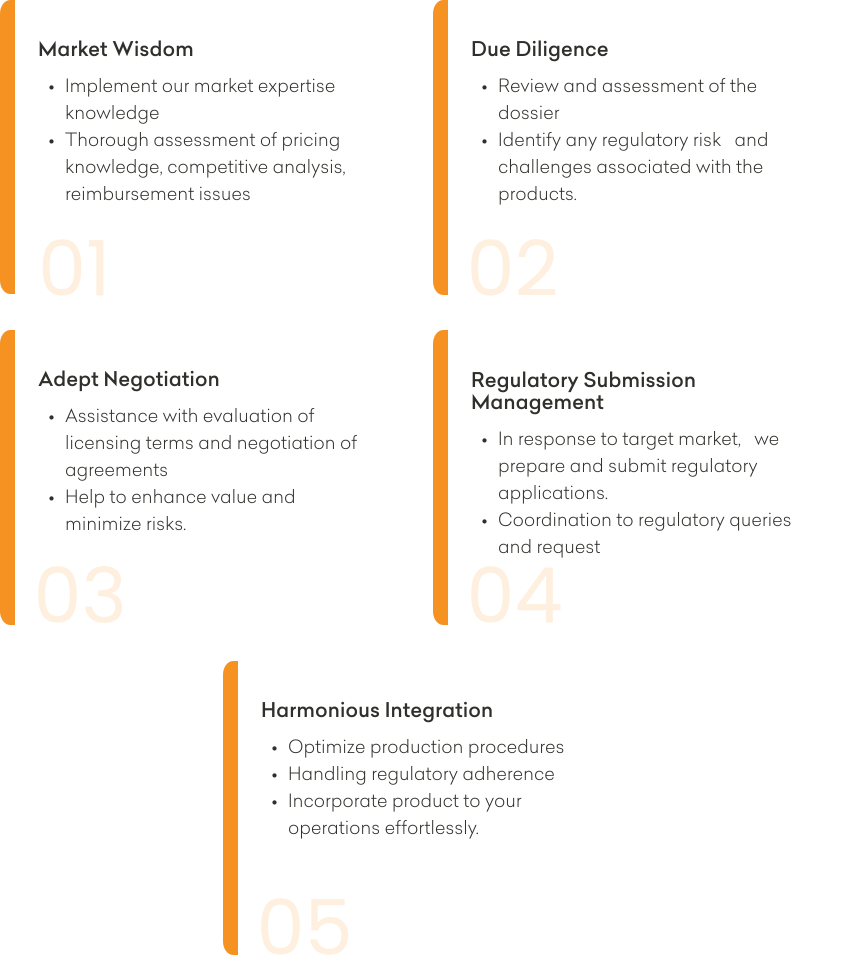
- End-to End Support
We handle every aspect of the dossier in licensing procedure, from initial assessment to final integration, ensuring your success.
- Strategic Planning
- Handle Regulatory Submission
We handle the preparation and submission of regulatory applications, coordinate responses to queries and requests, and ensure compliance with target market requirements.
- Complete Expertise
Our industry knowledge ensures you receive the best guidance and support in understanding the complexities and strategic importance of dossier in-licensing.

People Also Ask (FAQs)
Dossier in-licensing refers to the process where a pharmaceutical or biotech company evaluates a regulatory dossier or product documentation before acquiring or licensing a drug from another organization. This evaluation helps determine the product’s regulatory status, scientific quality, and market potential before entering a licensing agreement.
Conducting regulatory due diligence during dossier in-licensing ensures that the product documentation complies with global regulatory requirements. A detailed dossier evaluation helps identify gaps in clinical, non-clinical, or CMC data, reducing potential regulatory risks and ensuring informed decision-making before licensing a product.
During dossier in-licensing assessment, regulatory experts review key documents such as CTD modules, clinical study reports, non-clinical data, CMC documentation, regulatory correspondence, and previous submission history. This comprehensive review helps assess the readiness of the product for regulatory approval or further development. Zenovel supports this process by conducting detailed due diligence, identifying potential risks or gaps, and providing actionable insights to ensure informed decision-making and smoother regulatory pathways.
Zenovel provides specialized dossier in-licensing evaluation and regulatory due diligence services for pharmaceutical and biotech companies. Their experts review CTD modules, regulatory documentation, clinical and non-clinical data, and identify potential regulatory gaps or risks. This helps organizations make confident decisions when acquiring or licensing new drug candidates.
Companies should conduct a dossier in-licensing review before finalizing product acquisition, licensing agreements, or technology transfer deals. Early regulatory dossier assessment allows organizations to understand the product’s approval pathway, data gaps, and compliance status, ensuring smoother regulatory strategies and minimizing unexpected challenges after the deal is completed.
Blogs and news
Our Latest Article

Introduction to Generic Inhalation Product Development Inhalation products pose significant challenges in generic drug development due to the complexity of formulations and device technology, making bioequivalence more difficult to establish compared to conventional oral dosage forms. Examples include Albuterol MDIs (metered dose inhalers), DPIs Dry Powder Inhalers, and nebulized therapies,

India is a significant player in the global pharmaceuticals sector, characterized by a diverse population and cost-effective infrastructure. However, its potential in clinical research is hindered by complex regulatory challenges that delay innovations and deter investment, affecting the timely market introduction of life-saving drugs. This blog discusses the major obstacles

The FDA issued 466 Form 483s to drug organizations in FY 2022, more than double the previous year, highlighting significant quality failures in the pharmaceutical sector. For startups and scale-ups seeking market approval, the excitement of innovation often conflicts with the strict requirements of current good manufacturing practices (cGMP). Although

Introduction Liposomal Amphotericin-B is a critical antifungal medication that requires careful attention during Bioequivalence (BE) studies. These studies aim to demonstrate the similarity of a generic liposomal Amphotericin B formulation to the reference drug in terms of pharmacokinetics. Zenovel, with its extensive experience in monitoring Amphotericin B studies, can play

In the pharmaceutical and biotechnology industries, obtaining regulatory approval is essential prior to introducing new drugs or biologics to the market. A pivotal aspect of this approval process is the FDA Pre-Approval Inspection (PAI), which involves a comprehensive assessment of manufacturing facilities, processes, and data integrity to ensure adherence to

Risk Based Monitoring (RBM) is a more efficient alternative to traditional clinical trials, focusing on high-risk areas through data-driven insights. It ensures patient safety, data integrity, and regulatory compliance while reducing costs and timelines. However, the success of RBM depends on the competency of monitors, who identify risks, analyze data,