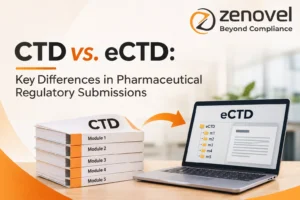
Most regulatory teams understand that the eCTD serves as the electronic equivalent of the Common Technical Document (CTD), but the practical differences between them can be surprising. While the content is similar, the processes of building, tagging, publishing, validating, transmitting, and maintaining submissions differ significantly, which can pose risks to submission timelines.
CTD vs eCTD: The Core Distinction: Content Structure vs. Technical Container
The CTD outlines the structured organization of a dossier, while the eCTD specifies its electronic construction and delivery, including file structure, XML framework, and lifecycle model. Essentially, the CTD serves as the blueprint, and the eCTD is the executed system for submission. A well-crafted CTD can still lead to failure at the eCTD stage due to potential technical rejections at the container level, even before scientific content is reviewed.
| Aspect | CTD | eCTD |
| Nature | Organizational format for dossier content | Electronic specification for building and transmitting that content |
| Navigation | Table of contents and cross-references, whether on paper or in PDF | XML backbone drives the viewer; hyperlinks and bookmarks are required |
| Review experience | The reviewer relies on the dossier’s own structure. | The reviewer uses agency software to move across sequences and compare versions |
| Regional content | Module 1 is regional by design | Module 1 follows region-specific XML and file requirements |
| Validation | Content checks and completeness review | Automated technical validation against agency rules before acceptance |
| Transmission | Physical or media-based historically | Secure electronic gateways and portals |
What Changes for the Submission Team
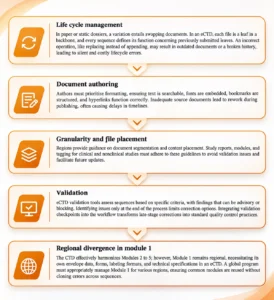
eCTD version 4.0 is more flexible than its predecessor because it uses a more adaptable messaging framework. This improvement supports better document reuse, clearer lifecycle management, and richer metadata. However, adoption timelines and technical requirements vary by agency, so agencies must confirm regional specifics and adjust publishing tools and processes.
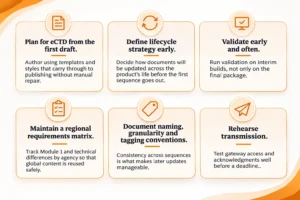
Practical Recommendations
Zenovel helps sponsors transition from a well-organized dossier to a clean, accepted electronic submission, offering practical support throughout the process. Our regulatory consultants offer CTD dossier services, such as CTD preparation and submission to the concerned local and global regulatory agencies
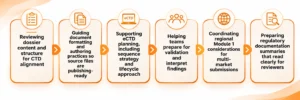
Whether you are assembling a first submission, planning a variation, or responding to an agency query, having a partner who understands both the science and the submission mechanics reduces avoidable delays.
The CTD provides guidance on story organization, while the eCTD ensures that the story is delivered intact, navigable, and traceable over time. Teams that view eCTD as part of the authoring and planning process, rather than just a final publishing step, tend to have fewer surprises and manage cleaner lifecycles.
Planning an upcoming submission? Contact Zenovel to discuss how we can support your CTD and eCTD needs.