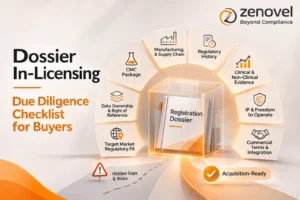
A registration dossier may appear complete but can lead to poor acquisitions due to unaddressed gaps, history, and dependencies on external factors. Buyers risk facing issues such as deficiency letters, stalled approvals, supply interruptions, or contract disputes. This checklist is for informed buyers, emphasizing verification steps before finalizing the deal and highlighting common pitfalls. A structured dossier in-licensing due diligence process helps buyers identify regulatory, quality, legal, and supply-related risks before committing to an acquisition.
Confirm You Can Actually Use the Dossier in Your Target Markets
A dossier is only valuable if it supports a filing in your territories. Before going deeper, test fit:
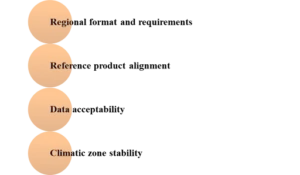
- Ensure that the module structure and regional content meet local requirements, such as language, stability zones, labeling conventions, and local agent or MAH rules, without significant rework.
- Confirm that the reference product used in bioequivalence or comparability studies is approved by target regulators, as using a product from the wrong market can result in high costs.
- Verify that clinical, bioequivalence, and bioanalytical studies meet the expectations of the relevant authorities, considering any requirements for local data or bridging.
- Ensure that stability data for climatic zones is adequate for the launch countries and that the proposed shelf life is achievable.
Interrogate Data Ownership and Right of Reference
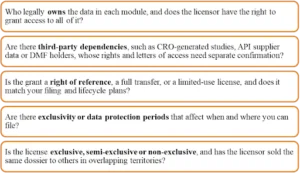
This is where legal and regulatory diligence meet. In dossier in-licensing, confirming data ownership, access rights, and the right of reference is essential to ensure the acquired documentation can support regulatory submissions in the intended markets.
CMC Package Audit
Quality modules pose significant risks due to potential hidden issues, and the Quality Overall Summary should not be the sole reference. During dossier in-licensing, a detailed CMC review helps buyers uncover quality-related gaps that may affect approval timelines, manufacturing continuity, or future compliance obligations.
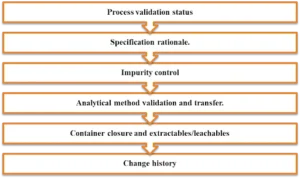
- Process validation status pertains to whether validation is completed at commercial scale or based on pilot or exhibit batches, and it includes an inquiry into the batch size history.
- Limits within specifications should be justified by data and must align with current pharmacopoeial standards and ICH guidelines.
- Impurity control involves assessing nitrosamine risks, evaluating elemental impurities, controlling genotoxic impurities, and justifying residual solvents. It is essential to ensure that these assessments are aligned with current guidance, not just the date of the dossier’s compilation.
- Analytical method validation and transfer ensure that methods are validated for their intended purpose and are transferable to testing sites.
- Container closure and extractables/leachables must ensure that data adequacy is confirmed for the intended packaging, beyond just the original presentation.
- Request a log of any changes and variations after approval or submission, as discrepancies between the dossier and the actual product could pose serious issues.
Verify Manufacturing Sites and Supply Chain Readiness
The dossier includes details on sites and suppliers, which should be regarded as integral components of the purchase.
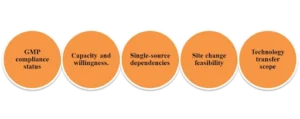
- GMP compliance status for drug substances and products, including inspection results, warning letters, import alerts, and unresolved observations, is detailed for each site.
- Capacity and willingness of the manufacturer to supply, including the contractual freedom to do so.
- Single-source dependencies for the API, key excipients, or critical components, and their respective contingency options are highlighted.
- Site change feasibility involves understanding the necessary comparability data and the bridging and variation pathways required for adding or moving a site.
- Technology transfer involves identifying the essential know-how, in addition to the documented information, necessary for consistent product reproduction.
Check Regulatory History and Open Issues
A dossier’s history is crucial for forecasting its future. It is important to gather previous agency inquiries and responses, confirm outstanding commitments, and investigate any refusals or rejections. Approval status should be reviewed by country, ensuring reliance on licensor approvals is feasible. The dossier must align with current regulatory standards, reflecting data integrity and any new regional requirements. Finally, it is essential to check for any unresolved safety signals, PSUR/PBRER obligations, or inherited risk management duties.
Review the Clinical and Non-Clinical Evidence
Evidence quality is crucial for dossiers focused on bioequivalence. Evaluation should include study design, statistical methods, and protocol deviations, alongside conclusions. Data integrity must be confirmed through audit trails and historical inspections of CRO and bioanalytical sites. For biologics and complex products, a thorough assessment of comparability, similarity, immunogenicity data, and analytical characterization is essential. Additionally, ensure that non-clinical and safety data align with the intended indication, dosage, and patient population.
Look at IP and Freedom to Operate
A dossier does not grant the right to commercialize.
- Map patents, SPCs, and regulatory exclusivities in each target market, covering substance, formulation, process, and use.
- Confirm the licensor’s representations and warranties on non-infringement, and determine who bears the risk and cost of any challenge.
- Check for patent linkage or similar mechanisms that could delay your approval or launch.
- Understand how a Paragraph IV-type or other IP dispute would be handled and funded under the agreement.
Structure the Commercial and Contractual Terms to Match the Risks
Diligence findings should influence contract terms, including milestones based on regulatory outcomes. Ongoing obligations must address dossier maintenance, variations, renewals, and agency queries with clear cost and timeline allocations. The contract should ensure access to the licensor’s technical staff and records during reviews, align supply and quality agreements with the dossier, and establish remedies and exit rights for approval failures or compliance issues. Additionally, termination and transition terms should safeguard filings and data access if the relationship concludes.
Map Out Post-Merger Integration Before Closing
A strong deal includes a realistic route to approval. Effective dossier in-licensing planning should account for regulatory remediation, additional data requirements, site readiness, and the responsibilities involved in transitioning the product.
- Build a gap analysis between the dossier as delivered and what each authority will require.
- Estimate timelines and costs for any remediation, additional studies, site qualification, or translations.
- Identify the filing sequence that best uses reliance and recognition routes.
- Decide who will serve as MAH, local agent, and pharmacovigilance contact in each territory, and confirm the licensor’s cooperation in the transition.
Dossier due diligence sits across regulatory, quality, clinical, and legal disciplines, and the findings are only useful when they are consolidated into clear, decision-ready conclusions. Zenovel assists buyers with this process, helping teams evaluate dossier quality and suitability for their target markets before committing to a deal.
Zenovel offers a structured review of dossier modules to align with regional requirements, conducts gap analysis and remediation planning for filing readiness, identifies regulatory and CMC risks impacting deal terms, and documents findings for internal stakeholders. It provides input on filing strategies and post-acquisition regulatory planning, ensuring evaluators of in-licensing dossiers understand their investments and the steps necessary for product approval.
Dossier in-licensing hinges on regulatory outcomes, necessitating thorough diligence beyond just the document set. Buyers who confirm data rights, evaluate the CMC package, examine the supply chain, and structure contracts accordingly are more likely to successfully achieve approval and market a product.
Considering a dossier in-licensing deal? Contact Zenovel to discuss how we can support your due diligence.